TL;DR: Owning your first home is the perfect time to move past temporary "renter" fixes and build a cohesive, long-term vision starting with a whole-home colour strategy. By prioritizing a consistent undertone and treating surfaces like trim and ceilings as intentional design elements, you can create a professional flow that connects every room. For high-impact updates, skip the massive renovation and opt for a "system" approach—using specialized products like Renaissance for cabinets and Kitchen & Bath for high-moisture walls ensures a durable, professional-grade finish that lasts for a decade.
There is a specific kind of awe that comes with closing on your first home. You walk through the empty rooms, knock on the walls just to hear them, and feel the full weight of it: this is yours. Then the awe gives way to a slightly panicked question — now what?
Most first-time homeowners fall into one of two traps. They either freeze up and live in builder-white limbo for two years, or they go room by room on impulse and end up with a house that feels disconnected, like a furniture showroom with no point of view. The fix for both is the same: start with a whole-home colour strategy, and ground it in paint. Not furniture. Not throw pillows. Paint (not just because we're a paint company.)
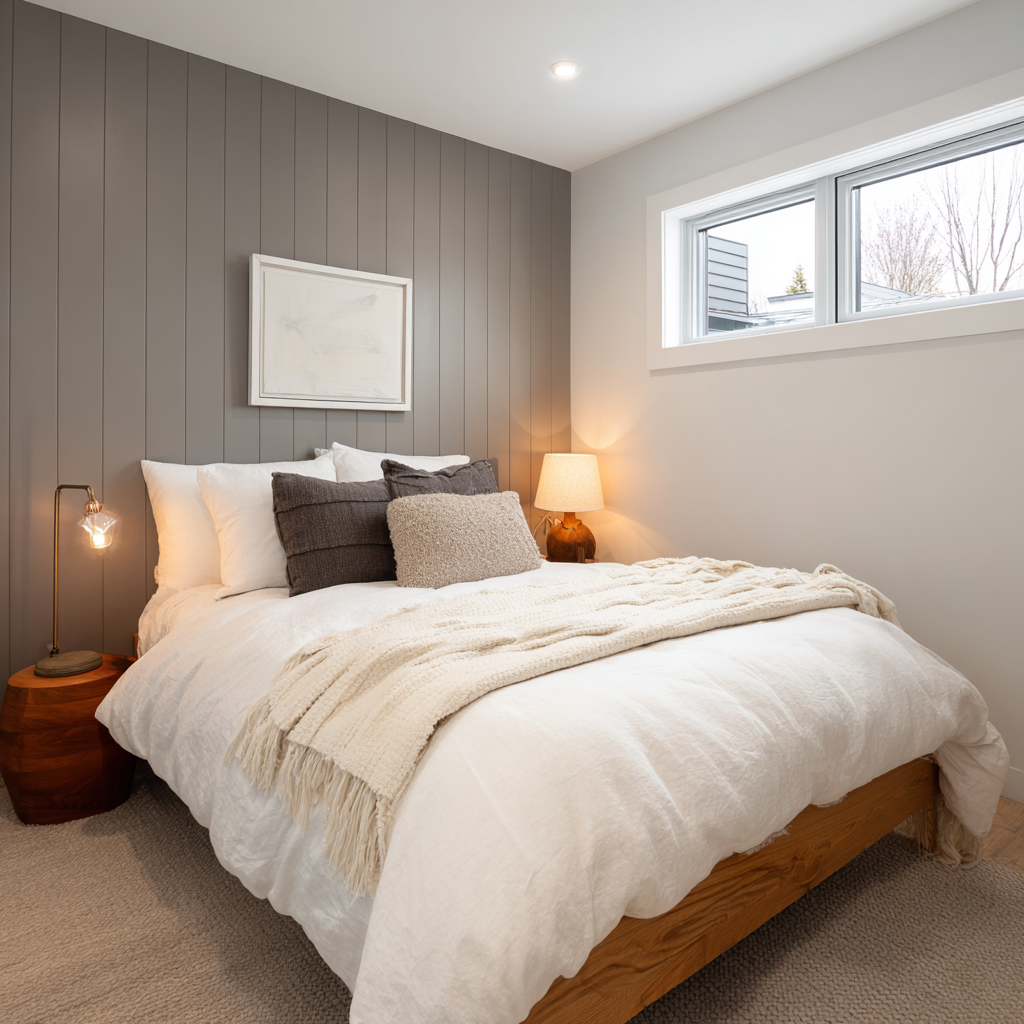
One Vancouver-area homeowner walked into the bedroom of their newly purchased home for the first time, and the previous owners had left their mark in a big way. The west wall was fully panelled and painted a deep emerald green, offset by greige on the rest of the walls. It sounded like a bold, considered design choice. In practice, with a single north-facing window positioned high on the wall and minimal overhead lighting, the room felt half its actual size: dark, closed-in, and more like a cave than a retreat.
The solution didn't require a renovation; it needed a rethink. They swapped the greige for Artisan White CA013 across the main walls, which immediately pushed the room open, bouncing what little natural light existed from corner to corner. For the feature wall, rather than abandoning the idea of depth entirely, they landed on Soapstone CA034, a soft, cool-toned neutral that kept the visual interest of a distinct feature wall without competing with the limited light. The result was a room that finally felt like somewhere to wake up in rather than somewhere to escape from.
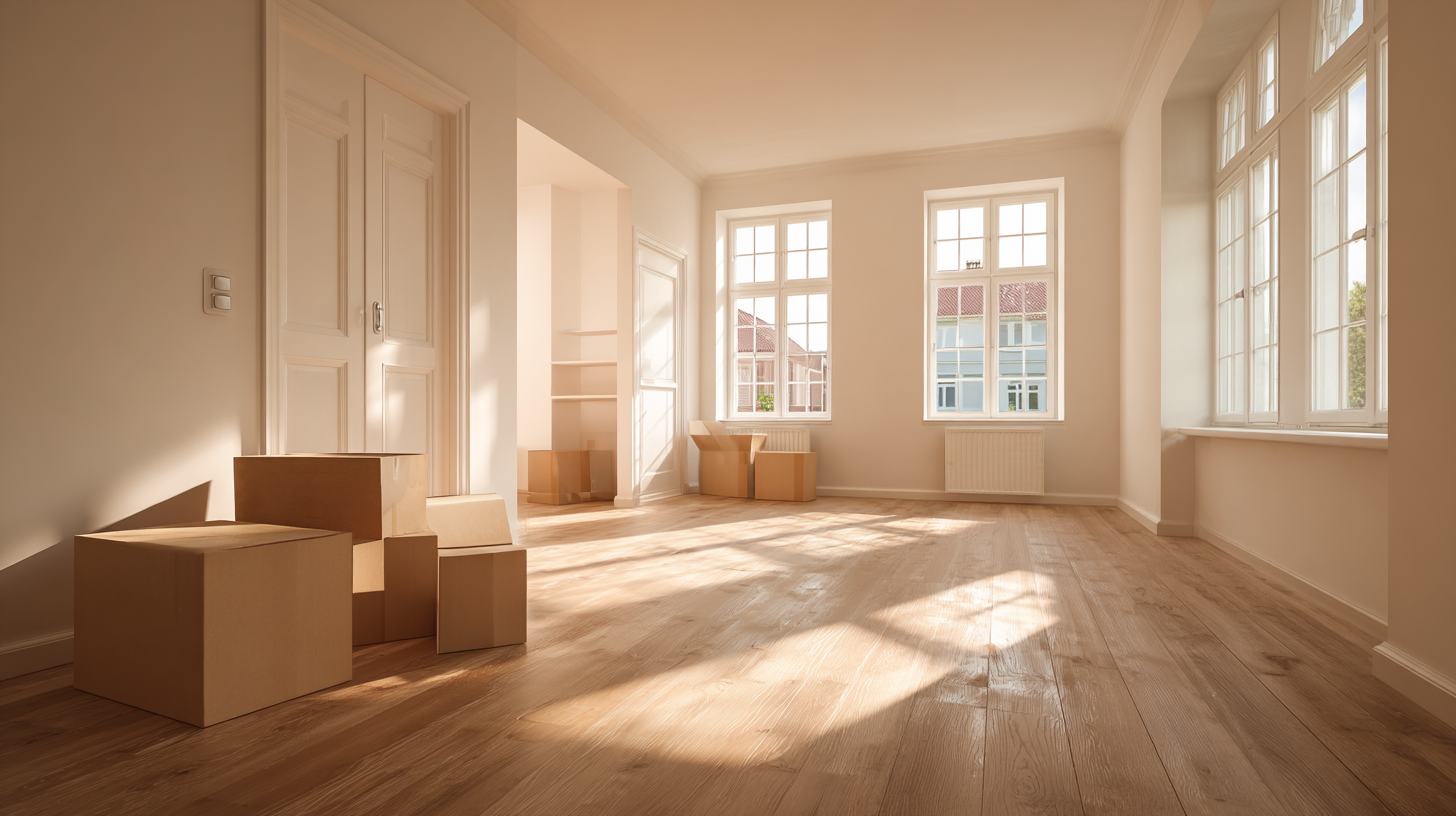
Changing Your Mindset for Choosing Your First Home Colour
Renting trains you to hedge. You choose colours that can be painted over, furniture you can move, and you make every decision with one eye on the door.
Ownership flips that entirely. The choices you make now compound. A thoughtfully chosen wall colour does not need to come down in two years. Quality window treatments earn their place over a decade. Good flooring holds and builds value.
That said, no rule says you have to figure it all out on day one. Living in your new home for a few weeks before committing to major colour decisions is genuinely one of the smartest moves you can make. You will learn how light moves through the rooms, which spaces feel too open and which feel like they need grounding, and what the existing bones of the house are telling you about what belongs there.
Start with a colour story for the whole home
The clearest difference between homes that feel designed and homes that feel assembled is colour continuity. In a well-considered home, each room has its own personality and the colours still feel like they belong to the same family. You move from the entryway to the living room to the kitchen, and something connects, even when the individual colours are clearly distinct.
That coherence comes from building your palette at the home level before you pick a single room colour. Start with one anchor neutral for shared and transitional spaces; the entryway, hallway, open-plan living areas, anywhere two rooms are visible at the same time. It needs to read consistently across changing light conditions and play well with everything around it.
From that foundation, build outward. The living room can go deeper and more characterful. The bedroom can be more specific to your taste. The home office can get genuinely moody. The kitchen can take a risk. Each space earns its own atmosphere, but the shared undertone family keeps everything feeling like one home.
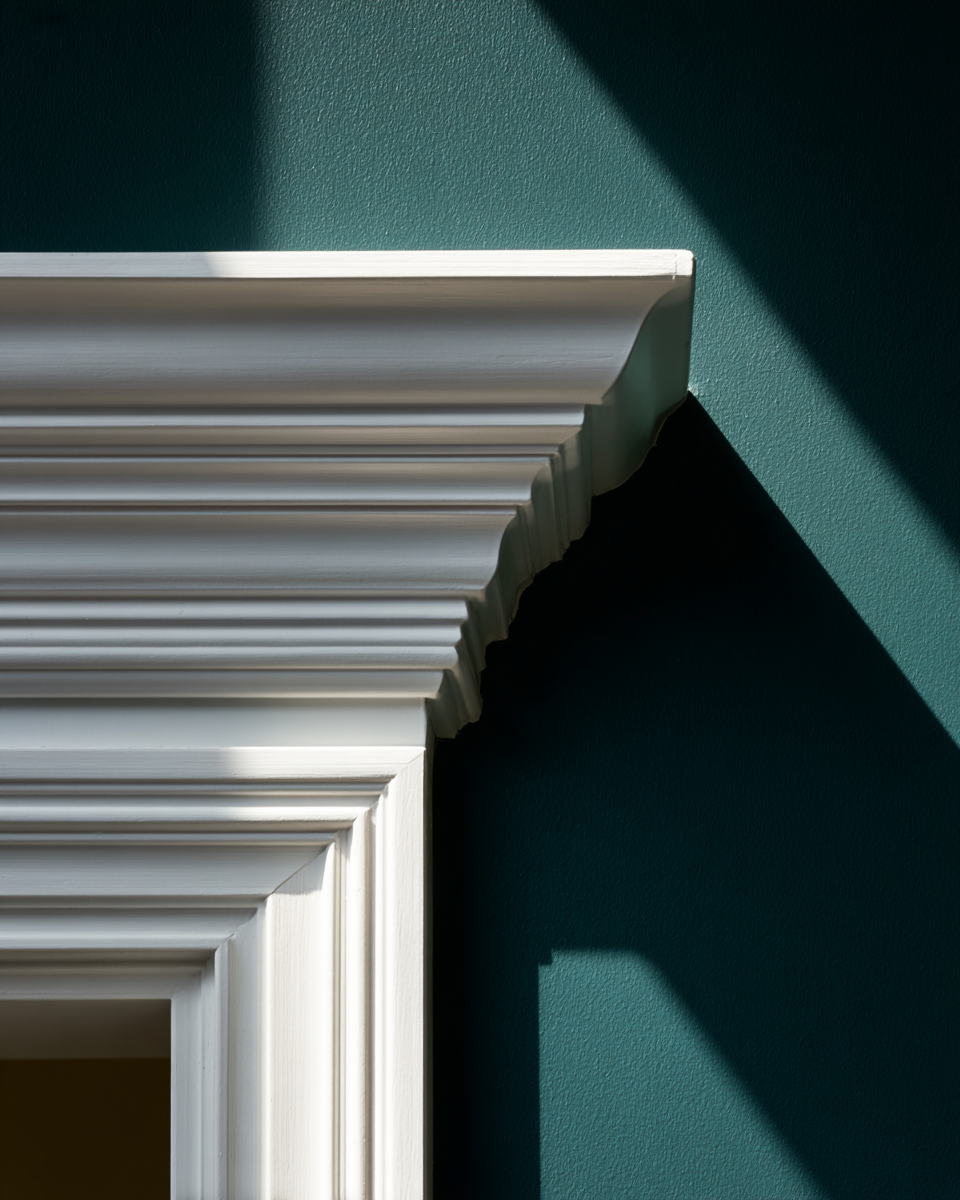
Undertones: one thing that people usually miss
Every paint colour, including whites and neutrals, has an undertone of warm (yellow, red, orange) or cool (blue, green, purple). Choosing colours from the same undertone family across your home is what creates cohesion without making every room identical. A warm greige entry, a warm sage living room, and warm terracotta in the dining room all work together because they share that warmth. Mix undertone families and the home starts to feel unresolved, even if every individual colour is beautiful on its own.
Different parts of your home that you can go further with paint
There is an entire category of paint decisions unavailable to renters, and they happen to be some of the most transformative ones.
Trim and baseboards: the most underrated call in any room
Standard trade practice is to paint all trim, baseboards, and door frames in a flat or satin white and leave it at that. That's fine, but it's generic. When you treat trim as a real design element rather than an afterthought, the character of a room changes without touching the walls.
Having a bright white gloss trim against a coloured wall creates crisp, graphic definition and makes even basic moulding look intentional. Matching trim to wall colour in a higher sheen creates a seamless, enveloping effect that works especially well in spaces where you want to feel cocooned rather than defined. Dark trim on light walls is a bolder commitment, but in the right home, it's genuinely extraordinary.
Ceilings are the fifth wall almost everyone ignores
Flat white ceilings are so standard that most people do not realize they are making a design choice by leaving them alone. But it is a choice, and not always the only one.
Going one to two shades lighter than the walls makes a room feel taller. Matching the ceiling to the walls in a flat finish creates warmth and intimacy, particularly effective in dining rooms and bedrooms. A bold ceiling colour above white walls is one of those moves that photographs beautifully and feels special to sit inside. Even swapping the cool, builder white for a warm white on the ceiling alone makes the whole room read differently.
Cabinet painting: a weekend project with outsized impact
If your kitchen came with solid wood or MDF cabinets in a colour that's not working, painting them is one of the highest-return updates you can make. The key is entirely in the preparation. Clean with a proper degreaser, sand lightly, apply a bonding primer like our Prime Solution Bonding Primer, and use a cabinet-specific waterborne alkyd formula. That process takes a weekend. The result holds up over the years and can completely reframe your most-used room without a big renovation budget.
For a professional cabinet finish, use a waterborne alkyd like Renaissance, which offers the durability of oil paint with the easy cleanup of water. Its self-levelling properties eliminate brush marks, though you should wait for a 30-day cure window before heavy scrubbing to ensure the finish fully hardens. On the surrounding walls and ceilings, switch to Kitchen & Bath to prevent mildew and resist the "burnishing" or shiny spots caused by frequent cleaning. Choosing a Pearl finish for these high-moisture areas creates a durable barrier that protects your drywall from steam far better than standard flat paints.
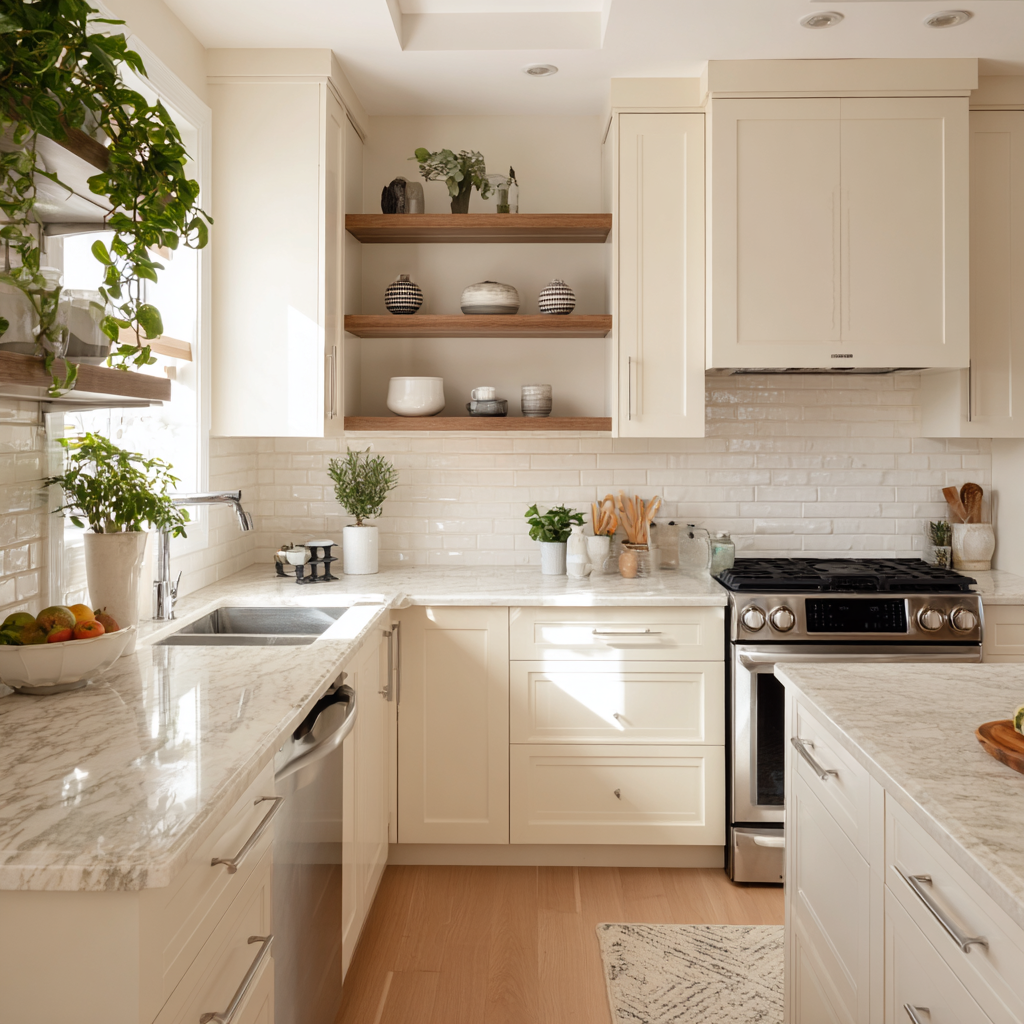
How to choose the right paint finish for every surface in your home
The sheen level of a paint finish affects how light reflects off a surface, how the colour reads, and how long it lasts. Using the wrong finish in the wrong place is one of the most common and easily avoided mistakes in a first home.
- Living room walls: Eggshell. Washable, low sheen, colours read true.
- Bedroom walls: Flat or eggshell. Flat is softer and more restful; use Eggshell if the room sees heavier use.
- Kitchen and bathrooms: Pearl. Handles moisture and cleaning without looking plasticky.
- Trim, doors, and baseboards: Semi-gloss. Creates contrast with walls, highly durable, and easy to wipe down.
- Ceilings: Flat. Absorbs light, hides surface imperfections, never draws attention to itself.
- Cabinets: Pearl. Needs to withstand daily contact and regular cleaning.
How to select paint colours by room
Each space has a function, a feeling, and a certain number of hours you spend in it. Let those things shape the colour direction rather than just pulling whatever looked good on a chip under store lighting.
- Living room: Your highest-traffic social space. Warm neutrals and earthy tones carry broadly. This room can handle more depth than you might expect on one wall.
- Kitchen: Often the hardest room to change structurally, so your colour choices are for cabinet paint and wall tone. Warm whites and soft, earthy greens tend to age especially well here and hold up as tastes shift.
- Bedroom: Built for rest and restoration. Colours that lower visual stimulation, like cooler greens, dusty blues, or soft lavender, work wonders in bedrooms. A deep, saturated wall behind the headboard is one of the more signature homeowner moves you can make.
- Dining room: Made for gathering, and one of the best rooms in the house to go bold. Deep, atmospheric tones like a saturated green, a dark wine, or a moody blue can make meals feel like occasions rather than just dinners.
- Home office: Cooler greens and blues support focus. If the room doubles as a creative workspace, a more saturated, darker wall can make it feel like a genuinely dedicated environment rather than a corner of another room.
Cloverdale Paint Colour Choices based on Rooms
These are pulled directly from our ColorIs, Artisan, and Narrative collections, with three strong options and favourites per room, so you have a range rather than a single point to land on.
Living Room
Timeless Taupe (EX014): A warm, grounded taupe and one of the best whole-room anchor neutrals in the Narrative collection.
Greige (EX326): Exactly what a greige should be: neither grey nor beige, reads consistently across all lighting conditions.
Artifact (CA074) An earthy, warm tan with brown undertones creates an inviting environment.
Bedroom
Tranquil (EX149) The name is earned. Soft, restful, and works beautifully in both good and limited natural light.
Solitude (EX150) A natural companion to Tranquil, slightly cooler and more enveloping, ideal for a feature wall behind the bed.
Simple Serenity (0614) A quiet dusty blue that consistently earns a place in any bedroom.
BONUS: Day Spa (0634) Our 2026 Colour of the Year earns a spot in any bedroom for a bolder look.
Kitchen and Bathroom
- Artisan White (EX077) Warmer and more livable than standard white, holds up well in rooms that get a lot of daylight.
- Fern (EX055) A fresh, earthy green that is particularly strong paired with warm wood tones and natural stone.
- Anise (CA155) A muted sage in the Artisan collection, one of Cloverdale's top greens and an excellent pairing with white cabinetry.
Dining Room
- Salish Sea (EX051) A deep, BC-inspired blue that is dramatic and distinctive — the kind of colour that makes a dining room feel like a destination.
- Rainforest (EX058) Rich and moody, a green that creates real atmosphere and photographs exceptionally well in candlelit dinner settings.
- Shiraz (EX117) A deep wine tone that brings genuine warmth and occasion to a gathering space.
Once you decide on a colour story, every subsequent decision has a framework to work within. Here is how to think about the non-paint elements with the same long-term lens, based on how some of our customers used our paint. Always go with your personal preferences and find inspiration everywhere. Each home is meant to be unique to you, so take the below as thinking points, not facts.
Invest where permanence and daily contact meet
Built-in shelving, light fixtures, cabinet hardware, door handles, and window treatments are in your peripheral vision every single day and are worth buying at a quality level you will still appreciate in five years. The same goes for anything you physically interact with constantly: the sofa, the mattress, the desk chair. The decorative pieces that sit on a shelf and get admired once a week can come from anywhere.
Think about what compounds over time, not just what looks good now
Well-prepared and quality-painted walls last 7 to 10 years before needing a full repaint. Painted kitchen cabinets consistently rank among the highest-ROI updates in a first home. Properly maintained hardwood flooring builds resale value. None of this means every decision has to be made through a resale lens, but it is worth knowing that investing in your home's design is not purely spending. Some of it is building.
The trio that transforms a room the fastest after painting
A properly sized rug anchors furniture and defines zones in open-plan spaces in ways that nothing else quite replicates. Multiple light sources at different heights, floor lamps, table lamps, under-cabinet lighting; all these considerations add dimension and warmth that overhead-only lighting cannot achieve, regardless of bulb quality. And a few well-placed plants do something to a room that styled objects simply cannot: they add life. Even a single large plant against a deep wall colour changes the feeling of a space immediately.
Build slowly and do not fill everything at once
The homes that feel most considered are almost always the ones that came together across months and years rather than weekends. It's absolutely ok to leave a wall bare while you wait for the right piece. Buy one genuinely good chair instead of three adequate ones. Negative space is actively working in your favour; it makes the things you do choose feel deliberate. Patience is one of the more powerful decorating tools available, and it costs nothing.
A quick checklist before you start:
- Use your furniture to help you decide on paint colours. These items can help you catch different undertones. Bonus points if you can clear the space and then paint, making your project turn into an afternoon gig rather than a whole week's job.
- Test every colour on the actual wall, as a large swatch, in your actual light, for a full day, morning and evening, lights on and off. No shortcuts here.
- Choose a whole-home undertone direction before picking individual room colours. Warm or cool. Depending on the light direction, you can mix warm or cool colours (North-facing rooms = warmer tones, South-facing rooms = cooler tones)
- Do not overlook trim. Freshly painted trim, even in the same white, changes a room. Decide on gloss or semi-gloss and keep it consistent throughout the house.
- Buy better paint than you think you need to. Premium paint covers in fewer coats, holds up longer, and touches up invisibly. Budget paint does none of those things and usually costs more in the long run through additional coats and repairs.
- Treat the ceiling as a real surface with real options. Even upgrading from a cool builder white to a warm white ceiling makes a whole-room difference that is hard to pinpoint but immediately felt.
- Add layered lighting before you decide you dislike a paint colour. A room lit only from overhead almost never shows a colour at its best.
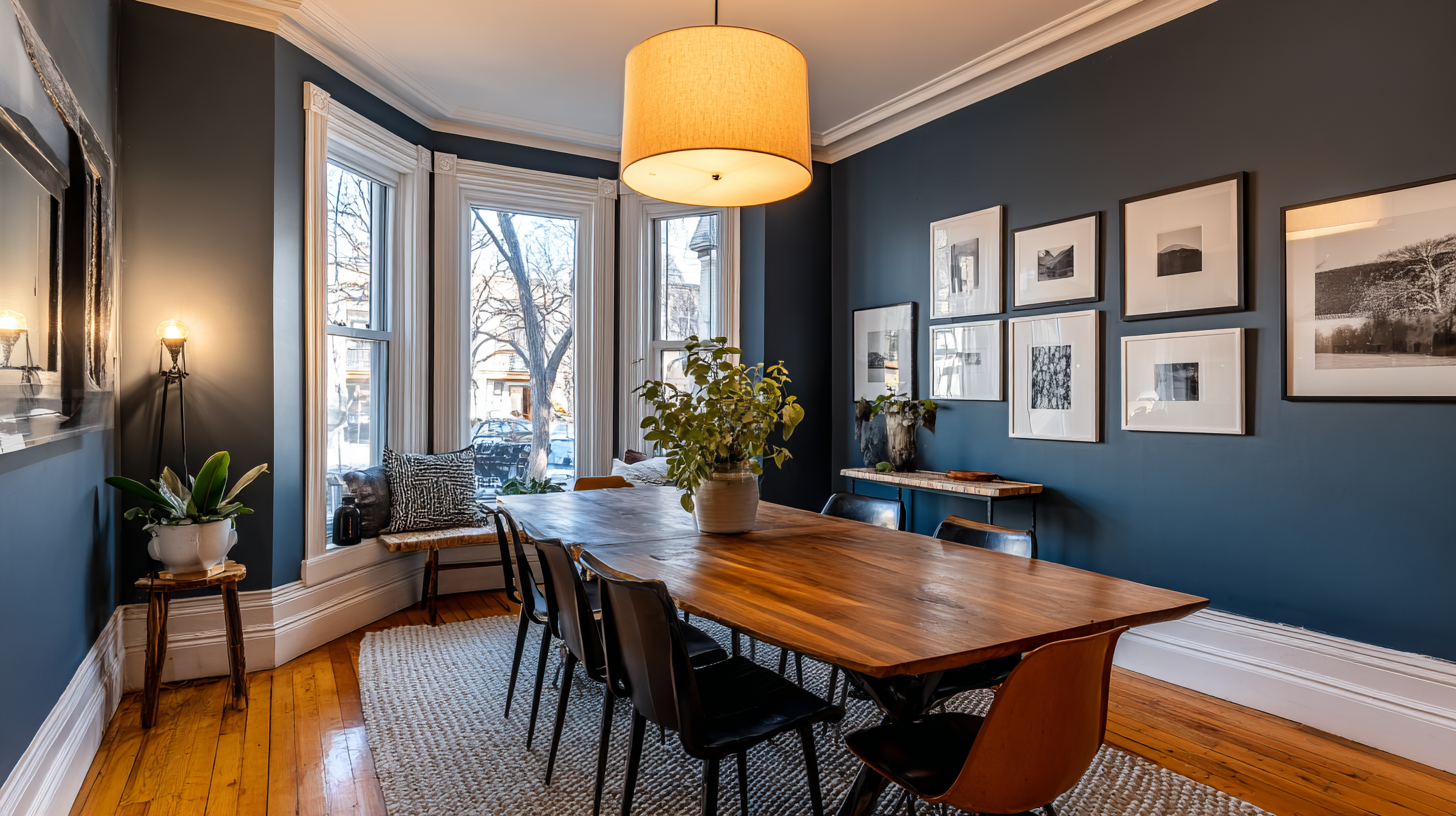
Common Questions from First-Time Home Buyers about Paint
What paint colours work best in a first home?
Start with the whole home rather than one room. Choose a dominant neutral for shared and transitional spaces, then build outward into deeper, more expressive colours in rooms built for a specific mood, like the dining room, bedroom, or office.
Warm greiges, soft sages, and earthy whites tend to be the most liveable and forgiving anchor choices. Testing large swatches on the actual wall before committing is non-negotiable, and keeping undertones consistent across rooms is what creates a home that flows.
Should trim and ceilings be a different colour from the walls?
Treating them as intentional design surfaces rather than structural leftovers is one of the highest-impact things you can do. Bright white semi-gloss trim against a coloured wall creates crisp architectural definition. Matching the ceiling to the walls in a flat finish creates warmth and enclosure.
There is no single right answer, but leaving both as default builder white without considering the alternatives leaves real potential on the table.
What is the best paint finish for walls, trim, and ceilings?
Walls in living spaces: eggshell or flat. Kitchens and bathrooms: pearl or semi-gloss for moisture resistance. Trim, doors, baseboards: semi-gloss for durability and contrast. Ceilings: flat to diffuse light and hide surface texture.
Using the appropriate finish in each location is what separates a room that looks professionally painted from one that just looks...painted.
How do I make colours flow from room to room?
One anchor neutral in shared spaces, plus supporting colours in individual rooms that all come from the same undertone family. The colours can be clearly different from each other; the consistency of their undertones is what creates the sense that they belong together.
Is painting kitchen cabinets worth it?
For most first homes with solid wood or MDF cabinets in good structural condition, yes. It ranks among the highest returns for your home investment, particularly in kitchens with dated or builder-default colouring. Keep in mind, the preparation makes or breaks the result: degrease, sand, prime with a bonding primer, and use a cabinet-specific alkyd formula, like our Kitchen and Bath. Done properly, it looks custom and lasts for years. Painting cabinets with shortcuts makes the paint chips within months.
How long does quality interior paint last?
On a properly primed and prepared surface, 7 to 10 years in most living spaces before a full repaint is needed. High-traffic corridors, kitchens, and children's rooms may need touch-ups sooner. Choosing a premium brand and the correct finish for each surface significantly extends that lifespan. The cost difference between standard and premium paint is a decade-level decision, not just an aesthetic preference. Don't just take our word for it, our customers speak for the quality and durability of our products for us (visit your nearest Cloverdale Paint and read our reviews!)
When should I paint?
Paint before you move in, if at all possible. That window will not come again without a full furniture-moving operation. For everything else, wait. A few weeks of actually living in the space almost always reveal how you use the rooms differs from how you imagined using them on a floor plan. Those insights are worth more than the head start on painting.
Bottom line: colour choices for your home are just as important for long-term living.
Decorating a home you own is a longer game than making a rental feel livable, and that is genuinely a good thing. You have the time to build it with intention, to make decisions that hold up over years, and to create something that reflects who you actually are rather than a version of yourself racing against a lease end date.
Start with colour. Figure out your undertones. Test properly. Commit to the trim and ceiling as real surfaces. Put money where it compounds. Add things slowly and only when they are right.
The space does not need to be finished. It just needs to start well. A great coat of paint on walls you actually own is exactly that kind of start.
---
About the author: our Marketing extraordinare, Jeremy, is a first-time homeowner based in Vancouver, and is now somewhat obsessively interested in how colour and light shape the experience of being inside a home. Currently choosing a dining room colour for the third time because the first two were "almost" right.